Etiam pulvinar consectetur dolor sed malesuada. Ut convallis
euismod dolor nec pretium. Nunc ut tristique massa.
Nam sodales mi vitae dolor ullamcorper et vulputate enim accumsan.
Morbi orci magna, tincidunt vitae molestie nec, molestie at mi. Nulla nulla lorem,
suscipit in posuere in, interdum non magna.
Organic, simply means “non artificial,” in other words anything found in nature is organic. In relation to food the dictionary calls it “grown or raised without synthetic fertilizers, or pesticides, or hormones.” There are many harmful compounds found in nature, Including radiation. There are many different views on whether organic foods are really helpful to us, or in fact may be harmful. So as you can imagine, the subject of what’s organic has lead to many debates. It really comes down to what you feel is organic when considering growing your plants organically, although most would probably agree that their simply referring to non harmful compounds.
Organic food is free from artificial chemicals, pesticides, antibiotics, growth-promoters and fertilizers. That doesn’t mean NONE were used, just that they were not synthetic or artificial. But you can choose to not use any if you don’t want to. Just remember that’s what you’re paying for when you buy organically grown food from the store. You have control in your own garden. Organic food is also free from genetically modified ingredients. This process is known as ‘genetic engineering’. The idea behind genetic alternating is to transfer the beneficial properties found in some types of plants or animals such as resistance to attack by diseases, insects or herbicides, to other plants or animals that normally lack these properties. So genetically altered plants and animals are not considered truly organic.
Taste and Nutrition
While taste depends on many factors, such as the variety of the plant, when it’s harvested, and how far it’s shipped (shipping not a factor for home hydroponics), along with environmental factors, some people feel that organic food tastes better than non-organic food. But because taste is truly subjective to each individual, as a result it’s really hard to prove. Though according to some studies organic foods show that they have more vitamins and beneficial trace elements than conventionally grown food, so organic food has the potential to be more nutritious, and have a better taste. But there is no clear cut yes or no to this question. People generally associate organic food with better health, there local growers and less pesticides, as well as more humane treatment of animals and better environmental practices.
But according to Science in Society by Northwestern university “National Organic Program, which regulates the process of growing organic food, which is actually a marketing program within the U.S. Department of Agriculture, “the government stops short of making any scientific claims that organic food is safer or more nutritious than conventional foods. So with the price of food continuing to increase in recent months, shoppers are wondering if organics are really worth the extra cost.” So it really seems to come down to personal opinion on the matter of weather organic food is better for you or not (at least at this point).
Packaged products made with at least 95 percent organic ingredients can use the USDA organic seal. There are strict fines for anyone caught mislabeling there products as organic. Although any vendor can tell consumers their farms are in the process of becoming organic, and those claims are unregulated, so be aware. Of coarse, unless you are selling it, you wont be facing those issues. But if you are truly wanting organic produce, you will still want to adhere to those guidelines for your garden.
Hydroponic Organic Fertilizers
With respect to organic soil crops, when nutrients from soil grown plants are removed from the ground or soil (because plants use them up), their not easily replaced, in order to maintain the soil balance. This is mostly because of the organic standards limited to the fertilizers they can use. This places organic fields at risk of nutrient depletion, in turn causing higher prices for the product. With respect to Hydroponically grown plants, plant nutrition is also the biggest factor, primary because of the limitations on what they can be derived from. Organic hydroponic nutrients are generally derived from things like bat guano, kelp, sulfate of potash, feather meal, oat bran, blood meal, and steamed bone meal.
In at lest one study from the University of Kentucky, Organic Fertilizers for Greenhouse Lettuce Production, there is a significant reduction in crop production resulting from the organic materials derived from algae (Algamin and EcoNutrients), when compared to non-organic nutrients. The dry weight of lettuce grown with these organic materials was only 10 to 18 percent of those grown in inorganic fertilizers (depending on plant), in the same type of system, and with the same conditions.
It seem the materials that organic hydroponic nutrients are derived from, can show to be less effective than the inorganic ones. Although It’s much easier to control nutrient levels in a hydroponic system than in soil, it can still be challenging to grow organically with hydroponics. But with some trial and error, time and patients, growing organically can be productive. On another note, the pH levels of the organic nutrient solutions may fluctuate more than they would when using inorganic nutrients and pH adjusters as well.
It can be easy to forget about the root systems of your plants, but with the root systems health being so vital, and the fact that healthy roots will grow vigorously throughout all stages of the plants development, there certainly an important factor to consider for growing healthy plants. Sometimes it can be easily overlooked, simply because there hard to see inside of the growing medium, and/or might just be hard to see inside the hydroponic system or setup your using. But never the less, root disease can occur in all types of hydroponic systems and using any type of growing medium (bark, pumice, sawdust, coco coir, rockwool, grow rocks, etc.).
Healthy roots simply grow healthy plants . Also, unhealthy roots can invite unwanted pests and disease, that can be damaging to your plants. Root disease is rarely due to a single pathogen, pest or fungi. There are usually as many as three or more different disease organisms that are identified in plant samples that commercial growers submit for diagnosis from their hydroponic systems. NFT systems are typically the most common to have root diseases, although this is most likely due to the fact that the roots are easy to see and get to in this type of system in order to see and identify the problem.
What to look for
Roots of young plants and seedlings cannot be dried out, where established plants can survive for a while when they become dry, the young plants wont be able to survive nearly as well. A young plants root system should have lots of white furry root tips everywhere. A healthy mature root system will be strong and fibrous and will have a thick root mat. If the roots are cream or yellow on top of the mat, they should still have many white root tips underneath at the bottom.
Generally healthy roots will be white in color, and quickly growing. Discoloration usually means there’s a problem Thick, fat, white furry roots are what you want to see, they are absolutely a good sign of healthy root growth. However the color of a nutrient solution will stain the roots, turning them yellow or brown. This is also true about many different nutrient additives, and older more mature plants may have a darker cream colored root system. Some plants will just tend to have a natural color pigment to their roots.
Vigorous root growth below will always mean vigorous plant growth above. The roots act as an anchor to help support the plants and keep them stable as they grow into the growing medium. Plants in aeroponic systems will need added support because they wont have any growing medium to otherwise hold on to, supporting the plant.
Root Zone Problems Problems can arise for any number of reasons, pathogens, nutrient temp, fungal disease, lack of air/oxygen (commonly known as over watering, or root rot) and even pests. Diseases can also be transferred into a hydroponic system from soil. If the plants are grown in soil, and the roots are then washed off for transplant into the hydroponic system, these roots can already contain the diseases and simply be transferred directly into your system.
Hydroponic systems are not completely sterile environments, even when starting with sterile growing medium, and plants started in a sterile hydroponic system. Fungi that are well adapted to living in water tends to be the cause of the most severe disease problems. Airborne spores can get into the growing media as well, and with the moisture, nutrients and roots to infect, they have what they need to spread. Many bacterial and virus diseases appear to spread well through nutrient solutions also. There are simply too many different possible infections that the roots are susceptible to, to be able to list them.
How to protect against disease in your hydroponic system
Because it’s practically impossible to maintain a sterile growing environment in any hydroponic system (except in aeroponics) it would be impossible to completely eliminate all the possible diseases the roots can get, but there are some things you can do to guard against them in the first place.
You should only start with clean, disease free water to begin with if at all possible.
Good hygiene, this helps control the spread of disease, as well as invitations to pests.
Sterilization of recirculating nutrient solutions. This would be hard to do for small reservoirs, but large commercial growers usually use either Ultraviolet light, or ozone treatment for there reservoirs. Smaller reservoirs can simply be changed, and the hydroponic system flushed.
Use of biological controls, (also called beneficial bacteria, or microbes). Probably the most commonly used is the “Trichoderma species.”
Hormones and other growth promoters, some growers have gotten good results from the use of these products, even though it can be open for debate weather they can protect against disease.
Fungicides in nutrient solutions. Chemical fungicides can sometimes be recommended, but will harm the beneficial microbes as well in the process.
Weather you grow plants indoors, outdoors or in a greenhouse, There are some basic things you need to consider in order to have healthy plants. A knowledge of the environmental requirements for the kind of plants you wish to grow is important and essential for success. There are many books, articles and extension services available that can provide this information on the specific plants you wish to grow, so I wont go into detail about specific plants. But I will mostly just focus on the basic plant needs of all plants in general.
The most important needs are:
Proper atmosphere, air, co2, water vapor (humidity) and oxygen both in the air and at the roots.
Proper temperature, both in the air and at the roots.
Correct environment, right temperature, pH, Humidity and light.
Good growing medium, both in hydroponics or soil. Non toxic, well draining, absorbent and supportive, with oxygen provided to the roots.
Balanced nutrition, with all the mineral elements plants need in the proper form and amounts. This can vary significantly from plant to plant.
Adequate lighting (proper color or frequencies at sufficient intensities. Growing in natural light (sun) you wont need to worry about this much, but the color spectrum, as well as the length of the days will vary depending on your location and time of year.
Proper moisture (not too wet or dry)
Tender loving care (an awareness of their needs during all various stages of growth.
Most hydroponically grown green Plants will do well with 800 to 2000 foot-candles of light, and between 20% to 80% humidity. Although it’s important to know the needs of your plants. High humidity and inadequate air flow can lead to bacteria and fungal diseases. Most green plants grown hydroponiclly do quite well at temperatures between 65 and 95 degrees F., and 800 to 1600 PPM (parts per million) of total dissolved salts.
Most hydroponic plants will do well with a pH of 5.5 to 6.5 and can be measured using a pH meter. It’s not always necessary to be exact with the pH, this is because plants will be able to absorb the nutrients within a pH range. There are many factors like temperature, and the exact nutrient composition that will affect how the plant is able to absorb the nutrients at a particular pH. These factors can change daily. That’s why it’s best to just be within a particular pH range, rather than an exact pH all the time. Even the adding of pH adjusters to your nutrient solution will affect the nutrient composition, so the less you need to add the better.
Plants get the Hydrogen and oxygen they need for growth directly from the air and water. Carbon, along with water makes up the bulk of a plants total mass, this comes from Carbon Dioxide (co2) from the air. This small amount (0.3% of the atmosphere) is absorbed by pores on the leaves called Stomata or Stoma when temperature, humidity and light are proper for the plant to do so. Carbon is not absorbed in quantity by the roots of a plant, so it’s not considered a “nutrient” in the same way that nitrogen, phosphorous, potassium and the other mineral elements plants need. These must be dissolved in water before they can be absorbed by the plants.
Plant Nutrition
In organic, or soil gardening, these elements are provided by weathering, decay and erosion of rock as well as the decomposition of organic matter through bacterial action. Hydroponics is simply “growing without soil,” so in hydroponics these elements are provided by mineral salts that need to be completely dissolved in water to make the nutrients available to the plants. Liquid nutrient solution is a bit easier to measure and mix than dry, but are not quite as concentrated or cost effective as the dry powders. So the choice here is mostly a personal preference.
“Grow” formulas are generally for the vegetative stage of the plants growth, and “Bloom” formulas are generally for the fruiting/flowering stage of the plants growth. That’s because the plants will require different concentrations of the mineral elements for these different stages of growth. Plants like tomatoes or peppers flower/fruit continuously, so they are considered continuously fruiting/flowering plants. Most nutrient manufactures make a nutrient formula for these continuously fruiting/flowering plants. Some of these will also be formulated for specific plants or crops.
As the plants grow, they absorb, or use up the nutrients in the nutrient solution, so it’s generally best to replace and replenish the nutrient solution every two to three weeks. The growing medium that holds the plant roots should also be flushed with fresh water at that time to prevent a toxic salt buildup. These salt buildups in the root zone can prevent the plants from getting their proper nutrition. You’ll usually see a whitish brown crusty material growing (building up) on the growing medium when this happens.
Tomatoes are probably the most popular crop to grow hydroponically, for both commercial growers, and home gardeners alike. For anyone who has grown there own tomatoes, they know that a homegrown tomato will have a much better taste than any store bought tomato will. That’s simply because the home gardener will leave the tomatoes on the plant until they are actually ripe, and a commercial grower will need to pick them before they are fully ripe so they will have a longer shelf life. So growing your own hydroponic tomatoes for better flavor is a very popular choice of crops for a good reason (their expensive, with poor taste in stores).
The major advantage of using hydroponics compared to field grown produce for tomatoes, is the isolation of the crop from the soil, which often has problems of diseases, pests, salinity, poor structure and/or drainage. Hydroponically grown tomatoes also have the ability to achieve high-density maximum crop yields. Although commercially grown hydroponic tomatoes are usually special hybrids, and some of the more popular varieties are Apollo, Belmondo, Caruso, Dombito, Larma, Perfecto, Trend and Trust. These are hybrid varieties and the seed can be rather expensive, especially for the home gardener. Some home gardeners generally will try germinating seeds from the mature fruit. Those successive generations wont necessarily have the same characteristics of the original plants, but are certainly worth trying.
Tomato plant problems Even though tomatoes are so popular, growing them with hydroponic systems can be challenging. Simply because of all the fungal diseases, virus, pests, and types of bacteria they are prone to getting, even when eliminating soil as a factor. Probably the number one contributor to tomato plant disease is wet foliage, and/or high humidity. The spores that cause the fungal disease are always airborne, but when the foliage is wet the spores have what they need (water), to grow.
You shouldn’t handle tomato plants when the vines and/or foliage are wet. This helps to spread the wet spores to other parts of the plant, helping the fungal diseases take over that much faster. It’s also best not to use tobacco products around your tomato plants, these products may carry viruses, especially tobacco mosaic virus. If at all possible, try to pick a sunny location for your tomatoes. You’ll be less likely to have leaf disease and related problems in a sunny location, rather than in a semi-shady one.
The root system for tomatoes plants should have good drainage, no mater what type of system there growing in. They are very susceptible to getting root rot diseases, as well as stem rot from water levels being to high. The water level in a flood and drain system (ebb & flow) should be just high enough to get the “root ball” wet (no higher). This allows the roots to get the moisture and nutrients they need, but prevents the stem from excess moisture that leads to the stem rot.
Insect infestation can be a big problem also. Especially aphids, which can transmit diseases to your plant’s. Aphids come in hundreds of kinds (even flying aphids that have large wings), and they all seem to love tomato plants. They especially love new foliage, and they lay there eggs on the underside of leaves that will soon hatch and continue to infest your plants. One of the best ways to get rid of aphids naturally and without using pesticides is to use Ladybugs. Ladybugs are the natural predator of aphids, and usually stick around as long as there is a food source. Ladybugs also wont cause any damage to any of your plants either, and they are kind of neat to have in the garden also. Most of the larger nursery’s will carry Ladybugs on hand, or they are easy to get online.
Why Bother Growing Tomatoes? Despite the many problems associated with growing healthy tomatoes (hydroponic or soil), they can be, and are, a very productive crop. In fact, most tomatoes sold in grocery stores are grown hydroponically at farms like Euro Fresh Farms in Arizona. Using hydroponics, and controlling the growing environment (temperature, lighting, nutrients, etc.) tomatoes can be grown year round with great results on a commercial level.
But for most of us, we just want to be able to grow good tasting tomatoes, and be able to have them on hand when we need them. You’ll never be able to get a real good tasting tomato unless you grow it yourself. That’s the real reason to grow your own tomatoes in the first place as far as I’m concerned. The difference in taste is like night and day to anyone who has ever grown there own. There’s nothing like picking a blood red tomato off your own plants to put in your dishes within minutes of picking them, they just don’t get better than that, and that make all the difference.
Aeroponics is a slight alteration of the traditional hydroponic system. Aeroponics gets its name because the nutrient solution is mixed with the air (“aero”) using misters or foggers to atomized the nutrient-rich water solution. Aeroponic systems simply uses a mist, or fog, to keep the root systems moist with the nutrient solution by spraying the plant’s dangling roots and lower stem with the atomized nutrient-rich water solution. These roots are generally housed in a closed or semi-closed growing chamber. Aeroponic growing is considered to be safe and ecologically friendly for producing natural, healthy plants and crops.
A true aeroponic system doesn’t use any soil or liquid medium, just a fine nutritious mist sprayed over roots suspended in a sealed chamber. It also provides plant support in such a way that the physical contact is minimized between the plant and support structure so that it doesen’t hinder the natural growth, or root expansion of the plants. Allowing for 100% of the plant to be entirely in the air and growing in unhenderd disease-free conditions. Long-term aeroponic cultivation requires the root systems to be free of constraints surrounding the stem and root systems.
Aeroponics systems use less water than a regular hydroponic systems does. This makes it an attractive growing method to commercial producers because it uses less resources to produce the same amount of product. Because the nutrients and water are combined with the atmosphere in the growing chamber, there is no need for large amounts of nutrient selution to keep the root systems from drying out. Commercial aeroponic systems generally uses one-tenth of the water otherwise necessary to grow the crop, but this can sometimes be reduced to as little as one-twentieth.
Aeroponic Systems, Saves Water and Resources Aeroponic systems are much better at contributing to more effective oxygenation of the root systems. Oxygen/air intake is very important to growing healthy plants. Both the mist or fog allows the root systems to grow a lot of fine hair like extensions on the roots because of the small particle sizes of the water droplets. This significantly increases the surface area of the root system, and allows the roots to uptake both the nutrients and oxygen/air more efficiently than they would in a typical hydroponic system. This factor also allows the plants to grow faster than they would in a typical hydroponic system (assuming all the other growing conditions remained the same).
Aeroponics for Disease Control
Aeroponics also provides a sterile environment for the root systems. When previously, clippings of stubborn plants such as cacti, and hardwoods were difficult to grow into full plants due to susceptibility to soil or water-borne bacteria, necessitating the use of seeds. Aeroponics provided the bacteria-free environment these clippings need to grow to maturity. If a plant does somehow become diseased, it can be easily and quickly be removed without leaving residual bacteria in the growing medium. Other plants like strawberry’s that are prone to pathogens and bacteria in soil, can be grown in aeroponic systems where they wont be subjected to these pathogens or bacteria.
Typically Strawberry’s are grown from bare root plants that were grown from the runners of mature strawberry plants. These runners are grown in soil where they can acquire these pathogens and bacteria that attach to the roots. Then the roots are washed off and the plant is put in cold storage to be shipped to the grower. The pathogens and bacteria still infect the roots where they can be transferred into the hydroponic systems of the grower. Aeroponiclly grown plants wont be able to transfer anything into the system, simply because they were never exposed to them in the first place. That’s a huge benefit for commercial growers.
Aeroponics for better quality
Another benefit in using Aeroponics as the growing method is, there is no soil or growing medium involved. And when grown inside greenhouses with no need for pesticides, there is none to wash to off. With no soil or pesticides to wash off, small herbs that would normally be damaged by washing (like chives, parsley, cilantro etc.) remain in pristine condition all the way to the table. This is an attractive benefit to restaurants who like to use fresh herbs in their dishes, where presentation is important.
Aeroponics and NASA Even NASA is using aeroponic technology for space exploration. Together with Aeroponics International, NASA is developing a self-contained, self-supporting, flexible low-mass aeroponics crop production unit. These inflatable aeroponic systems were designed for space-based applications, and collapse into a small area for lightweight, easy transportation into space. These units are ideal for growing food in space or other extraterrestrial environments, such as the international space station, Moon and Mars. When the first Moon base is scheduled to be set up around 2020, NASA will likely make use of aeroponics, removing the need to transport large amounts of soil and water for agriculture that would otherwise be needed to sustain the human researchers that will man these stations.
Some hydroponic gardeners need help with pollinating there hydroponic systems weather the garden is indoor or outdoor. But especially in indoor gardens like greenhouses and basement gardens because obviously there are no bees there to help pollinate their plants, and depending on the type of plant, or how many plants, hand pollinating can be a problem as well. In recent years some have been turning to the “Blue Bottle Flies” to pollinate their crops instead of bees.
Blue Bottle Flies are from the Blow Fly family. There larger than regular house flies, and grow about half an inch long. Their head and thorax (front and middle sections) are gray, the abdomen (large rear section) is bright metallic blue. They have red eyes and clear wings. Flies don’t intentionally go around pollinating flowers, they just manage to do that do that while their flying from flower to flower looking for good resting spots.
According to the North Central Regional Plant Introduction Station (NCRPIS) where they have been experimenting with using fly’s and other insects as pollinators, “In cages, these lazy flies are particularly good at partnering with honey bees to pollinate carrots and other plants in the carrot family. Two kinds of flies—blue bottle flies (Calliphora sp.) and house flies (Musca domestica)—have been put to work at NCRPIS.” They also go on to say “Blue bottle flies last longer in the cages, but more complete pollination occurs when both species are present.”
Like other fly’s the Blue Bottle fly is a meat eater and feeds from dead animals or and prefers fresh meat. They even feed on living animals with open wounds, animal poop, and other decaying matter. Although meat fly by nature, the Blue Bottle fly loves the nectar of flowers too. So they wind up pollinating the flowers unintentionally while they are looking for a little sweet drink. Whereas bees intentionally search out flowers to get nectar from, then take it back to their hive. As a added benefit fly’s work at cooler temperature than bees do, so they are even more beneficial in cooler climates, and to cool weather crops.
Even though the Blue Bottle fly may earn their keep, they still can’t escape the reputation of being fly’s. They can still be irritating to many people, even though they wont sting you. So it wouldn’t be a preferred method of pollinating in a house and/or near doors and windows where they could easily get into the home.
The fly’s work best in caged area’s like greenhouses because they are basically trapped. Once a fly leaves the area it does not generally return like bees will. The nectar in the flowers is a food source to bees, so they keep coming back looking for the food. For fly’s, meat is the food source, and the sweet nectar is just a nice extra if it happens to be in the area. Typically the more pungent or bad smelling something is, the more fly’s (Blue Bottle fly included) are attracted to it.
Because the fly’s are attracted to meat you can encourage them to stick around in the area with meat, fresh meat works best rather than already decomposing meat. Because fish tends to have a stronger odor, it usually attracts them best. They will also lay there eggs directly on the meat, producing another batch of fly’s to pollinate your flowers later. Compared to bees, flies have a much shorter life span, and are considered to be a short-term pollinator. They will need to be replaced often if pollinating continually flowering plants, like peppers or strawberry’s.
Even though fly’s have a short life span, from around 7 to 30 days depending on environment, you can breed them rather than buying more all the time. After mating, the female Blue Bottle Flies lays her eggs in the same place where she feeds (on dead animal flesh, fresh meat, animals open wounds, poop etc..). Then the eggs quickly hatch, and the young larvae, called maggots, eat immediately. The maggots are whitish in color, with small black hooks to tear flesh with. After a week or so of feeding, the larvae (maggots) crawl away to a dry place and burrow a little ways into soil. They then become pupae (resting stage). The pupae are tough brown cocoons.
This pupae is what you buy when buying these fly’s from a vender. The fly’s are in a hibernating/dormant stage at this point, and can be stored up to 3 months in refrigeration. After taking them out of refrigeration, adult Blue Bottle Flies come out of the pupae in about two or three weeks. They will breed often during the warm months, and both larvae and pupae can live through the winter, but adults die when it gets too cold. They will become active again when temperatures rise above 50 degrees during the day.
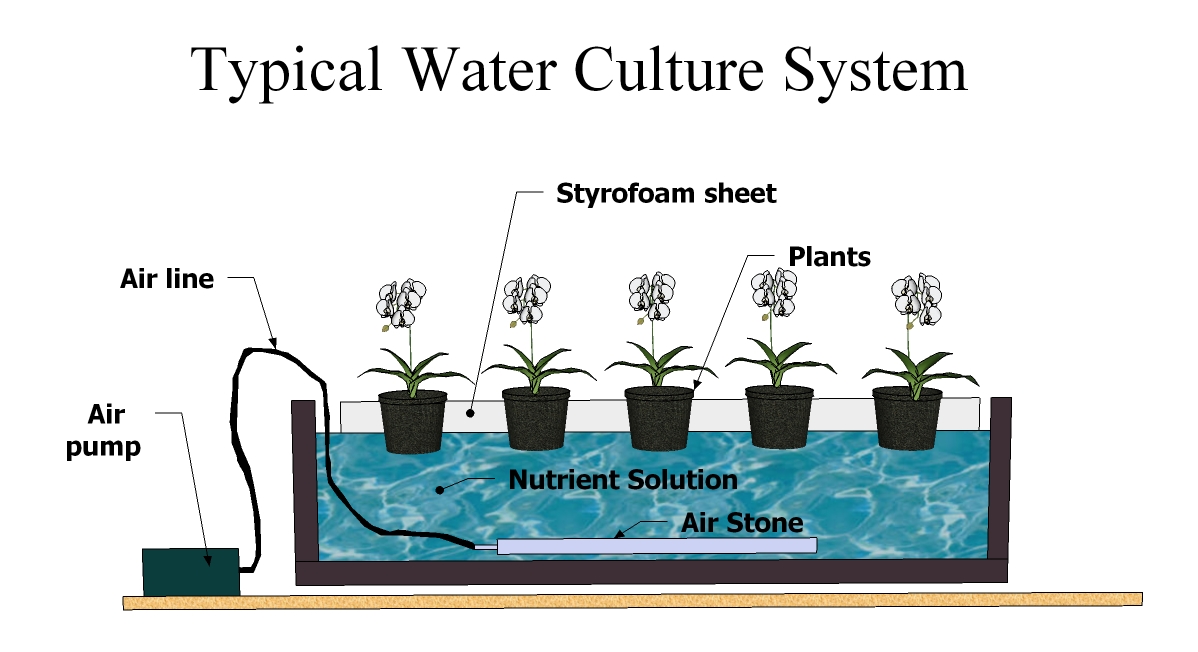
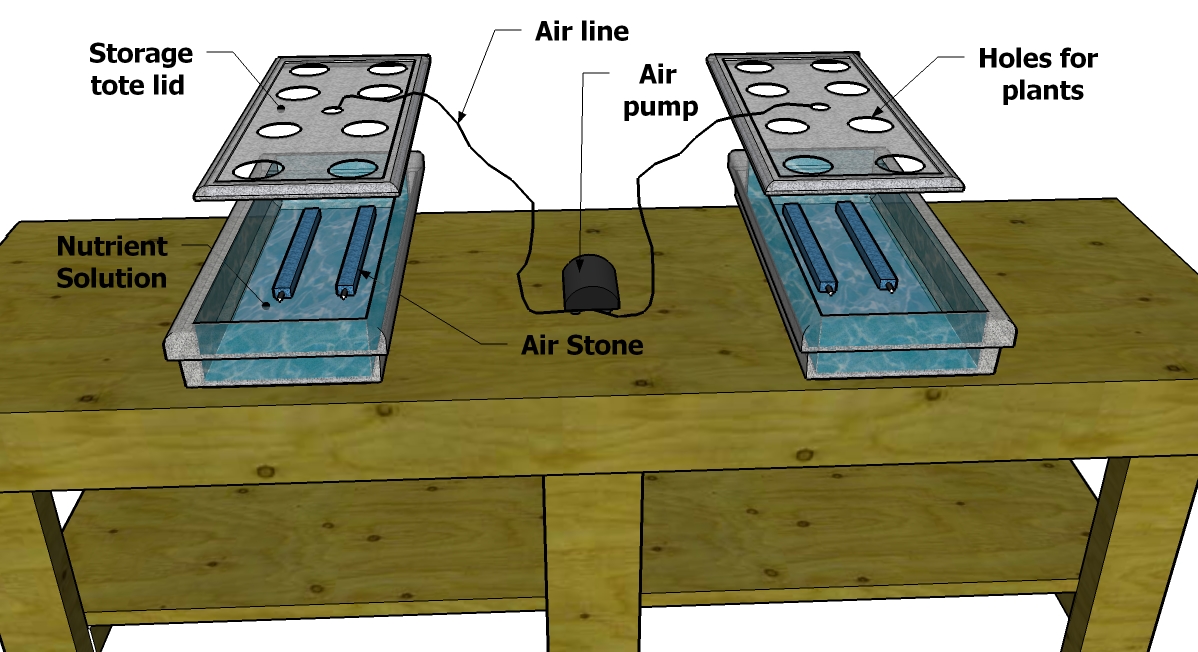
One of the easiest types of hydroponic systems to build is a Water Culture system. It’s also often called a Deep Water Culture (DWC) or a Bubble system. With a Water Culture System there is only one moving part, the air pump. The air pump supply’s a continuous flow of air to the air stones (blubbers). These air bubbles keep the roots from drowning or suffocating in the nutrient solution.
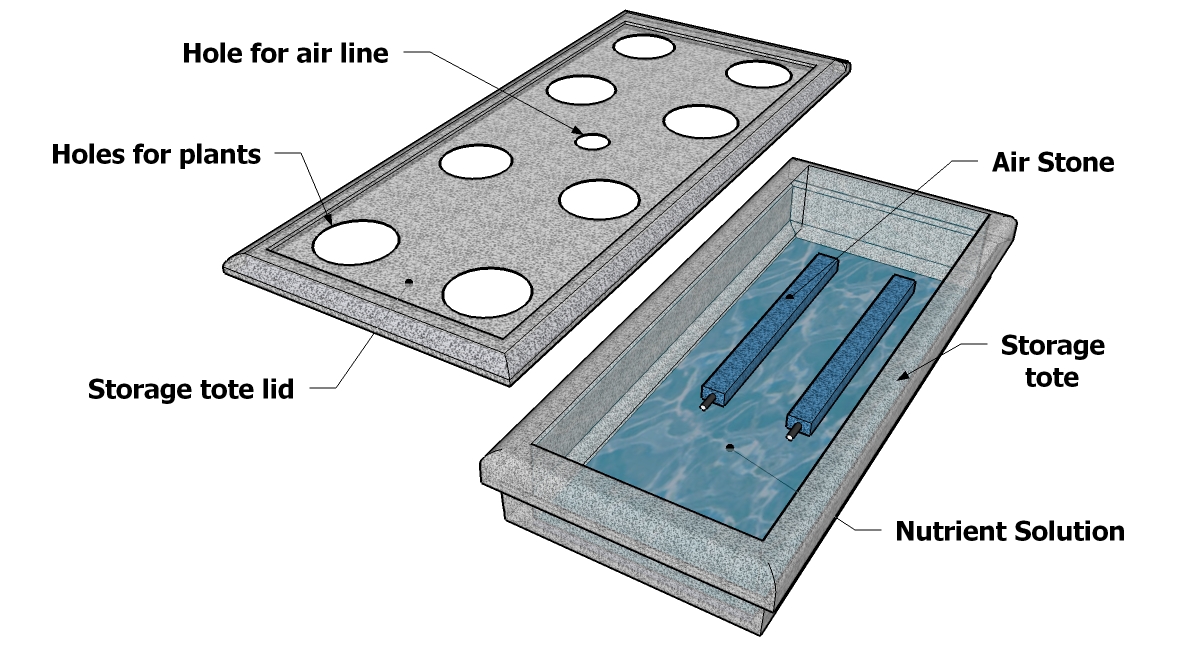
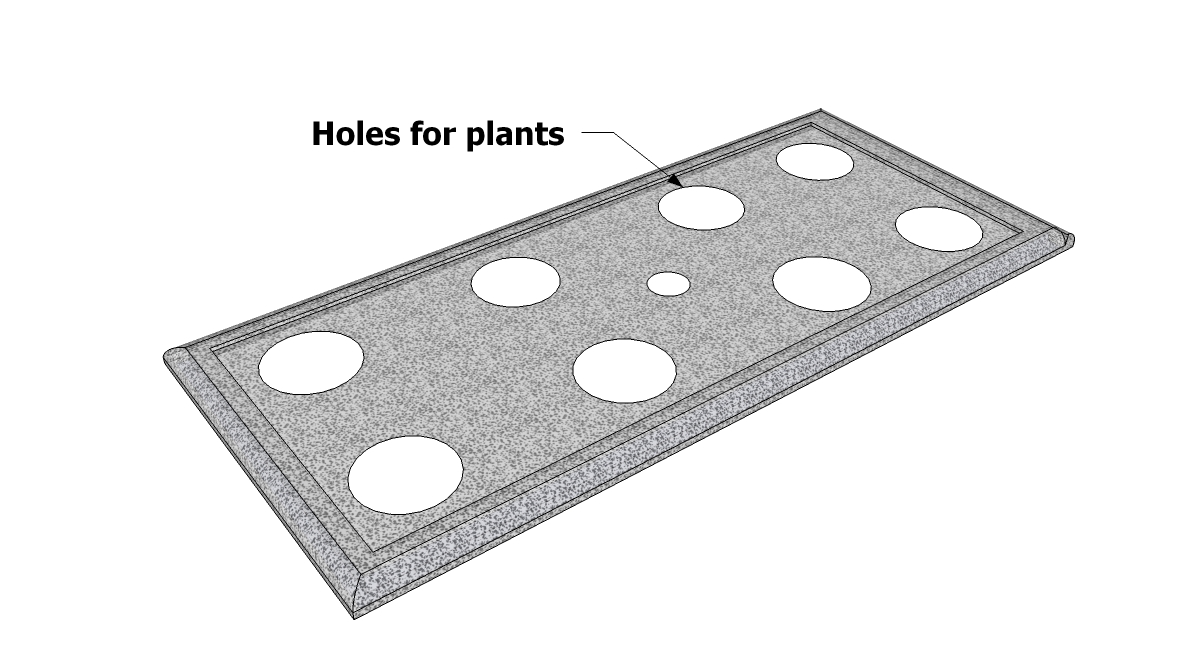
The plants are suspended above the nutrient solution. This is usually done by floating a sheet of Styrofoam on top, and cutting holes to fit baskets that hold the plants in them. This design will be slightly different in that the lid of the container will contain the holes that hold the baskets with the plants suspended above the nutrient solution.
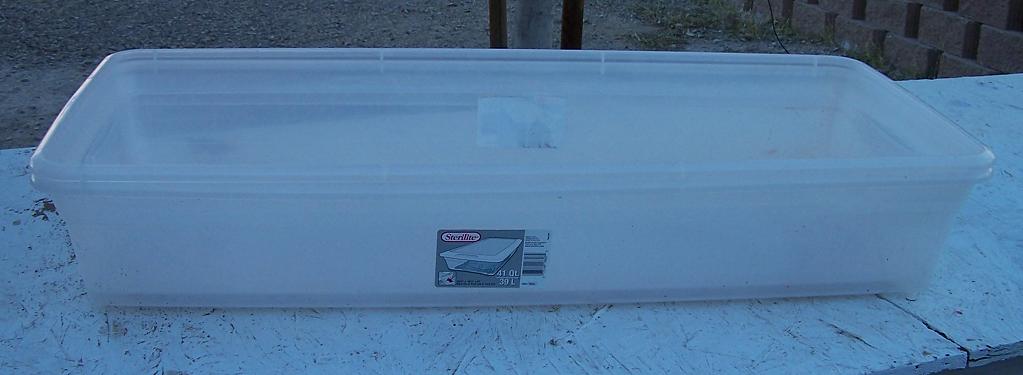
To build this hydroponic water culture system we used a 48 qt Sterilite storage tote (with lid) for the growing chamber. This is a good modular design, so you can easily scale it up or down to include as many growing chambers as you want. You will just want to make sure the air pump can supply each chamber with a good solid stream of air bubbles. If not, you can easily add more air pumps as needed.
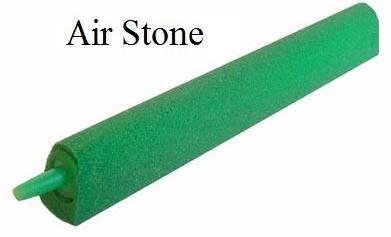
You can find inexpensive dual output air pumps at Wal-Mart for as little as $12, or single output ones for as little as $7. For this setup we are using one dual output hydroponic pump. When deciding on an air pump, the more air bubbles the better in general, just keep in mind that if you add more air stones it will space out the distribution of the bubbles, but there will be less air bubbles coming out of each stone.
Now measure and cut the 8 holes for the 3 inch net pots that will hold the plants. Make sure you don’t cut the holes to big or the net pots will fall through the holes. It’s better to cut them too small, you can always make it bigger if needed.
Now lay some newspaper down and place the lid on it top side up, and place the storage tote bottom side up. Paint both black, painting them black will block any light from getting inside the growing chamber. You’ll want to block the light because that will keep any algae growth down. Make sure you only paint the outside of the container, if you paint the inside it will contaminate your nutrient solution. Let black paint dry completely.
Now paint them again, this time with white paint. The white paint will reflect light. This is important because it helps to keep the nutrient temp down, as well as the temp of the root zone. Nutrient temperatures is very important to your plants health, so you will want to get all the help you can against high temperatures.
Now make a small hole in the center of the lid, large enough to run the flexible air line through it. Place the air stone/s at the bottom of the growing chamber (storage tote) where you want them. Then connect the air line to the air stone/s, and run it through the small hole you made for it in the lid. Then firmly connect the lid to the growing chamber and connect line from the growing chamber to the air pump. If your using more than one air stone per air line ,simply use a “T” connector to split the line into to lines.
Now you are ready to fill growing chamber (reservoir) with the Hydroponic Nutrients. Fill it until it reaches about 1/2 inch above the bottom of the net pots. You’ll want the growing medium to be able to wick up the water, but not be fully submerged. By letting just the bottom of the baskets touch the water the growing medium will be able to get plenty of water, and allow the roots to get the air/oxygen they need also.
Now fill the net pots with the growing medium and plants, then place net pots in the holes you cut for them earlier. Make sure the container is sitting level so the water level will be level, then turn on air pump on and watch your plants grow.
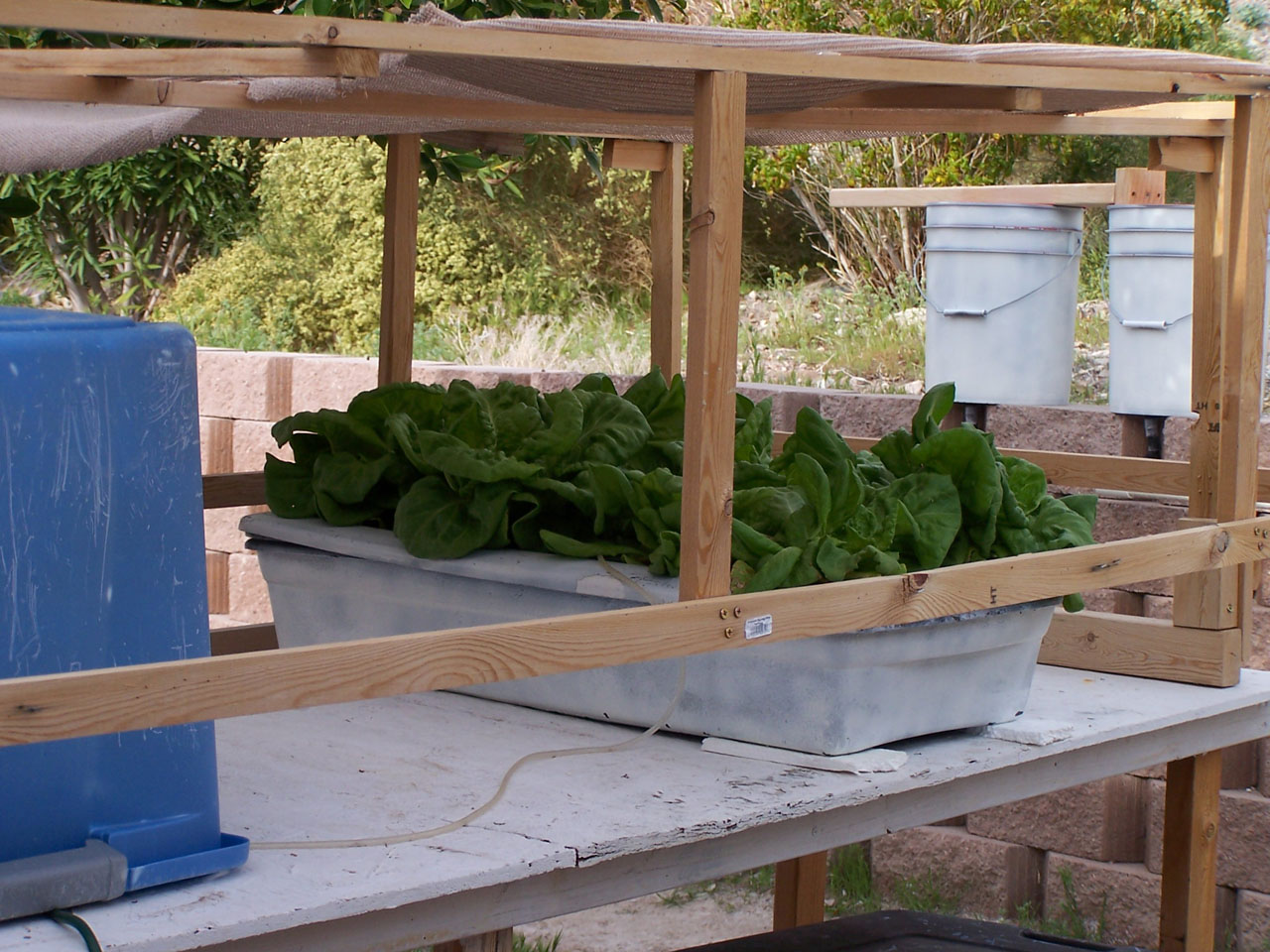
Lettuce plants do very well in this type of hydroponic system. Pretty much any water loving plant that wont get too top heavy will do well in it. Here is a picture of the the same system, but with only one growing chamber. It’s growing butter king lettuce. About 2 months before this picture, they were just seeds.
Parts
Storage tote (Wal-mart or any department store)
Air pump (Wal-mart or any ware you find fish aquariums)
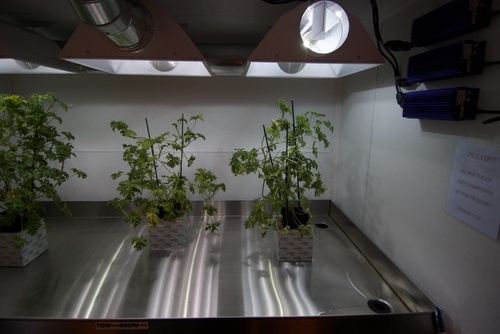
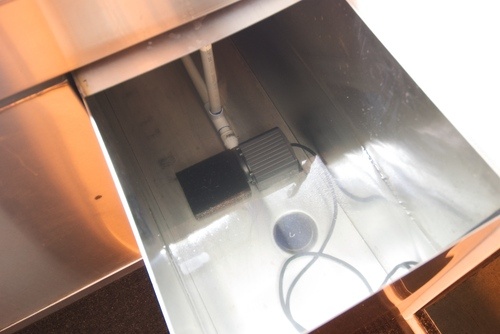
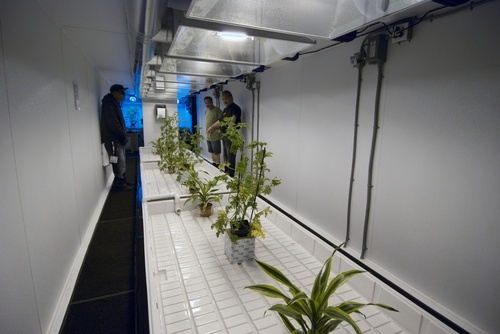
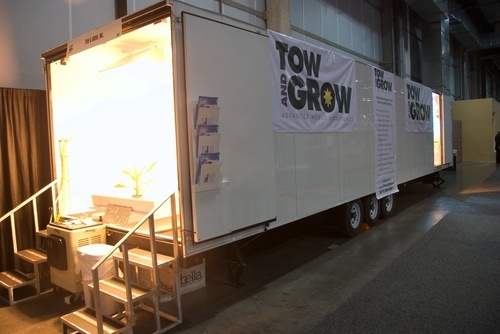
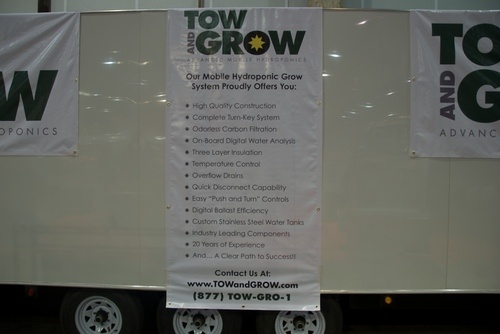
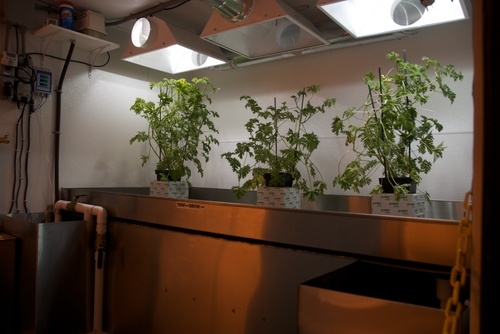
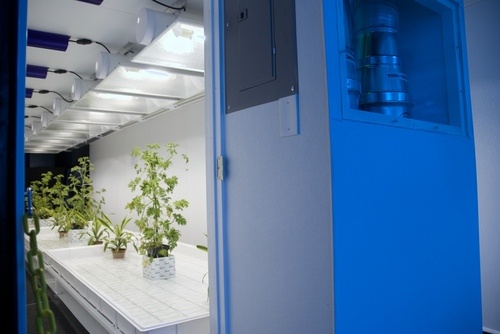
Take a look at this complete mobile hydroponics grow room installed inside custom trailers from Tow & Grow. The fully carbon ventilated trailer includes a 500 gallon temperature controlled nutrient tank and can be outfitted with 2,000 watts to 14,000 watts of digital HPS grow lights.
Take a look at this very well done homemade indoor NFT hydroponics system that our hydroponics forum member Txice built. NFT Hydroponics stands for Nutrient Film Technique Hydroponics, where the nutrients are delivered via a recirculating stream of solution that is driven by a water pump.
The nutrients in Txice’s setup are fed through drip lines that are hanging over each pot. The PVC pipes used are 6″ pipes and are angled slightly down so that the nutrient solution can flow back down to the containment reservoir. The setup allows for the nutrient solution to be easily changed without disturbing the roots of the plants.
The nutrient pump is on a timer that runs for 15 minutes every hour. Hanging above the plants is an adjustable set of grow lights that can be raised up as the plants grow higher. The grow lights are on a time as well running for 16 hours per day.
Right now this hydroponics system is growing brocoli, iceberg lettuce, black seeded simpson lettuce from seeds that were set in rockwool cubes and are now set into the pots with hydroton growing medium. Txice is also trying out some strawberry sprouts that were bought from Walmart. Special thanks to Txcie for sharing his new setup with us! You can ask questions of discuss this setup by viewing his NFT Hydroponics forum thread.